Unlock new career opportunities with radiochemistry
Radiochemists are in high demand across dynamic fields such as energy, medicine, public health, and national security. Are you ready to step into this exciting, high-impact arena? By earning a Graduate Certificate in Radiochemistry, you won't just solve complex problems—you'll be well-positioned to succeed in a wide range of sectors.
Imagine yourself driving innovation and making a real difference in the world. The University of Iowa, in partnership with the Association of Public Health Laboratories, offers the only program of its kind featuring flexible, online courses alongside an immersive two-week laboratory experience. This is an exciting, continuing education opportunity for current laboratory workers and graduate students.
Ready to help shape the future and elevate your career as a scientist and researcher? Contact us by clicking the "REQUEST INFO" button.
Program Learning Outcomes
Graduates of the certificate program will be able to:
- Evaluate the chemical and nuclear properties of radionuclides to apply appropriate methodologies for the purification and manipulation of radioactive materials
- Evaluate the use of instrumentation to perform various radiochemical analyses and apply instrumental analysis techniques across a wide range of sample types and radionuclides
- Apply radiation safety concepts and evaluate potential risks associated with radiation as they relate to radiochemical manipulation and measurement
- Analyze data generated from radiochemical analysis and measurement, ensuring complete results and defensible practices
Admissions requirements
- A bachelor's degree
- GPA greater than 2.5
- Two semesters of undergraduate chemistry coursework
Certificate admission
If you have applied to the APHL Scholarship program, please wait to submit your application until you receive notification of your award.
- UI Graduate College students (currently in a University of Iowa Graduate Program)
Please contact the Radiochemistry program by emailing radiochem-program@uiowa.edu. - Non-degree candidates (not currently a University of Iowa graduate or professional student)
Additional information for non-degree seeking students
We recommend starting in the fall. While the certificate can be completed in three to six semesters depending on your schedule, the curriculum is built around a year-long sequence beginning in the fall semester—followed by spring coursework and a two-week summer laboratory session. Students who begin in the fall and follow this sequence can complete the certificate in about one year. Because the application deadline (July 15) falls just before the fall semester begins, this is the ideal time to apply.
Online coursework
Most programs offering this kind of training in radiochemistry are not available online. That's where we differ. Eight semester hours are offered via asynchronous online instruction, so you can complete your coursework as your schedule allows.
Each one-semester-hour course is offered concurrently (one at a time) so that you only have one set of readings and homework assignments to complete each week, making it easier for students who are also employed full time balance work obligations. Course content is delivered through short (10–20 minute) recorded video lectures that you can watch at a time convenient to you. Courses also include:
- Weekly live office hours on Zoom with course instructors and teaching assistants for support on homework and course content
- Supplemental review recordings covering key chemistry concepts needed for more advanced material
- Virtual course management through Canvas, where all readings, assignments, and course materials are organized
- Online quizzes, homework, and exams to evaluate conceptual understanding, plus chat features and discussion tools to support peer learning
In-person lab work
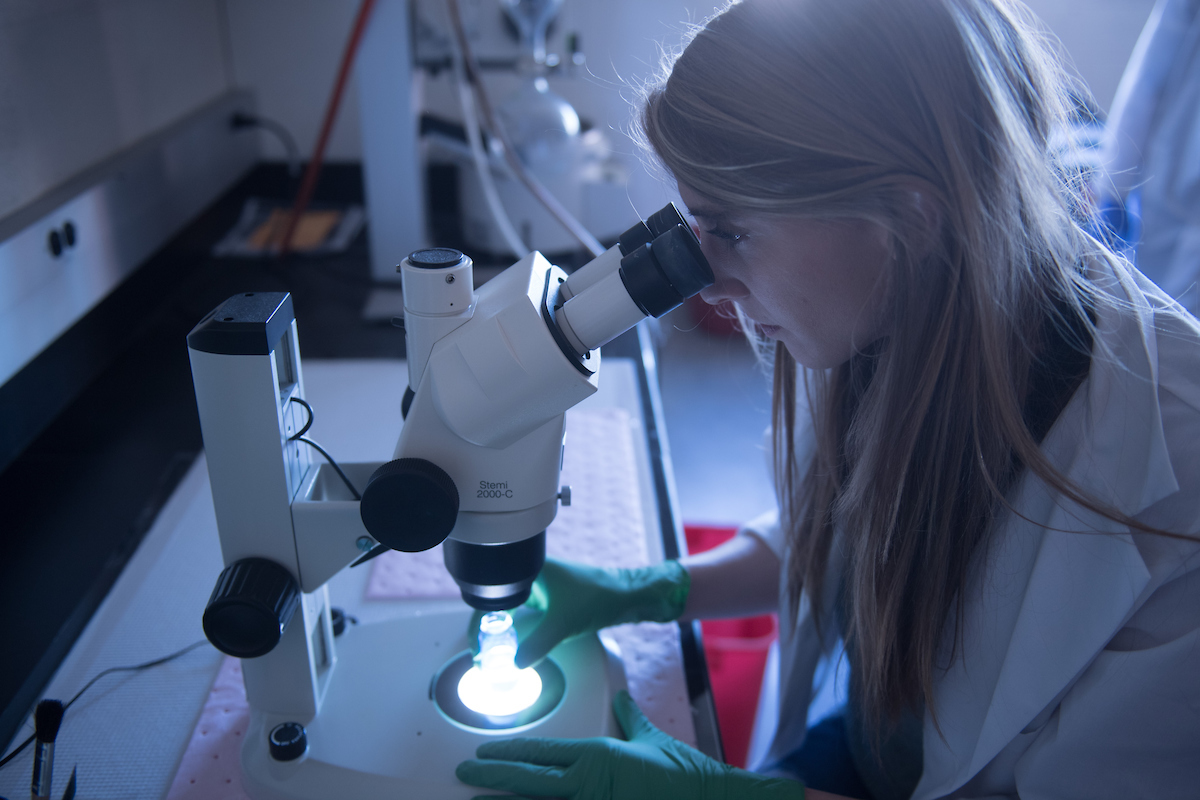
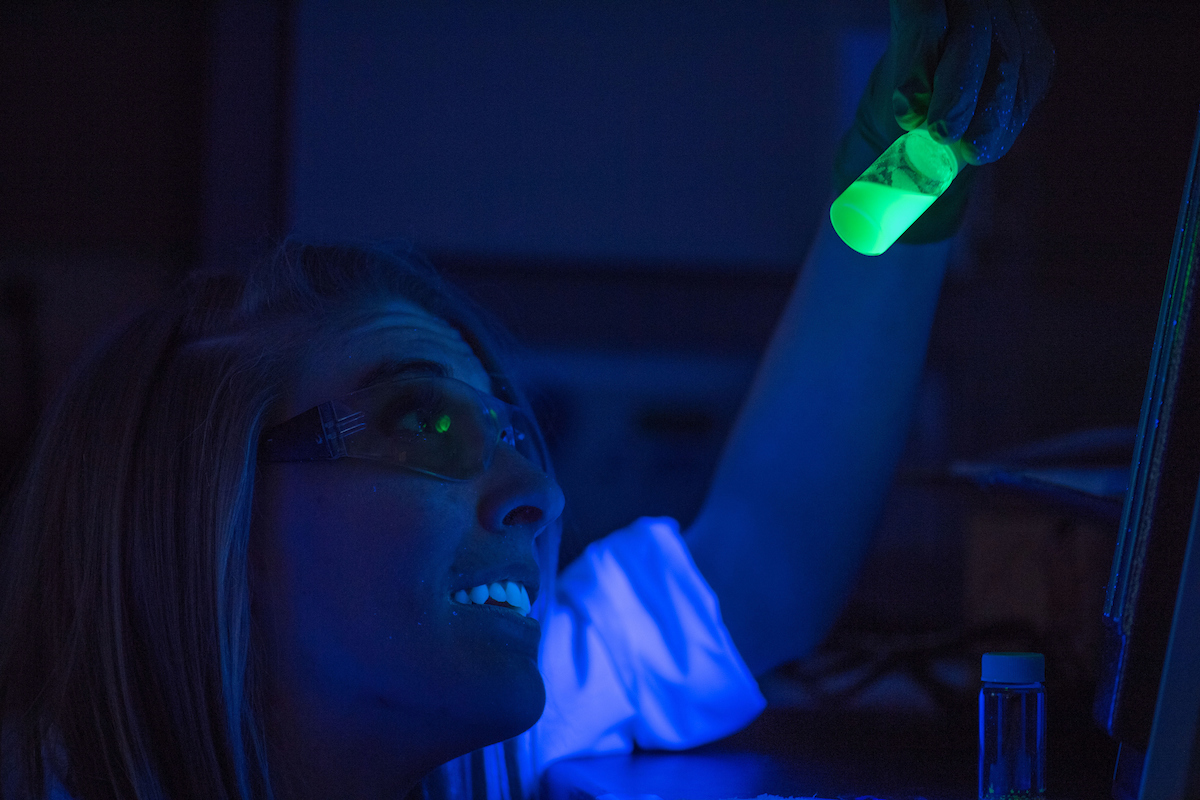
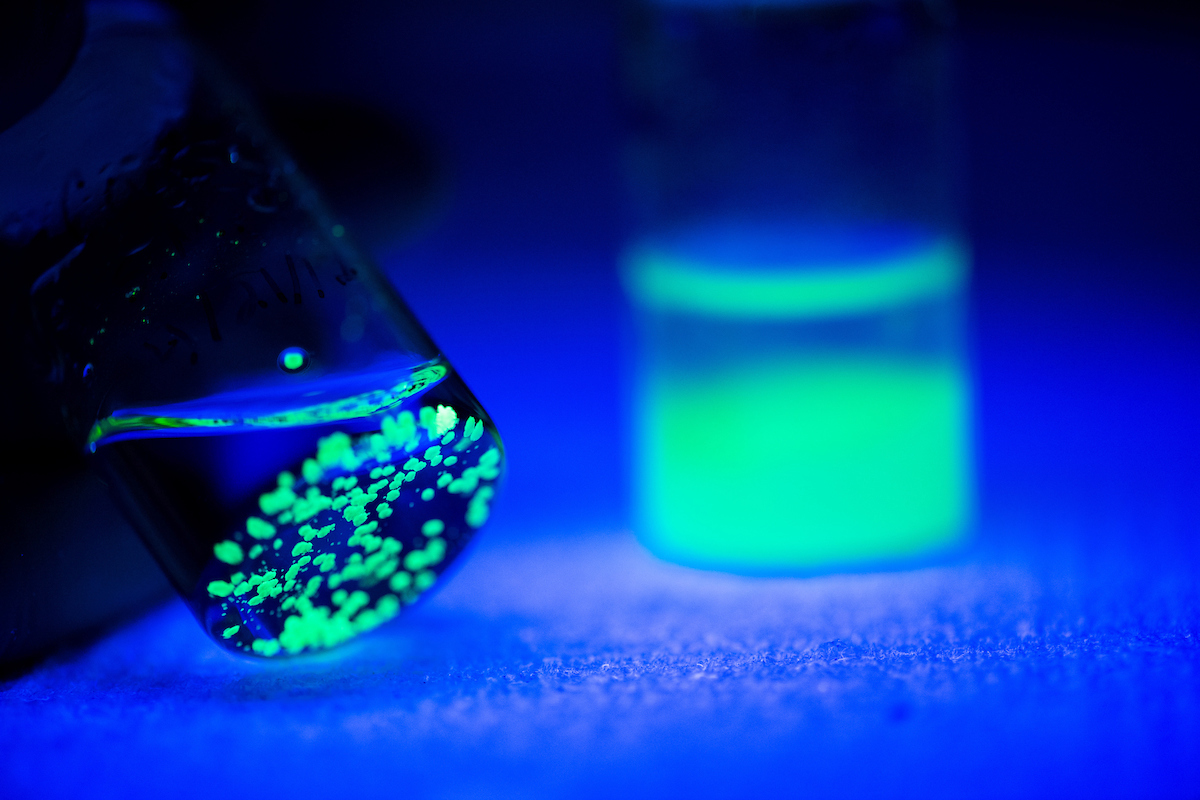
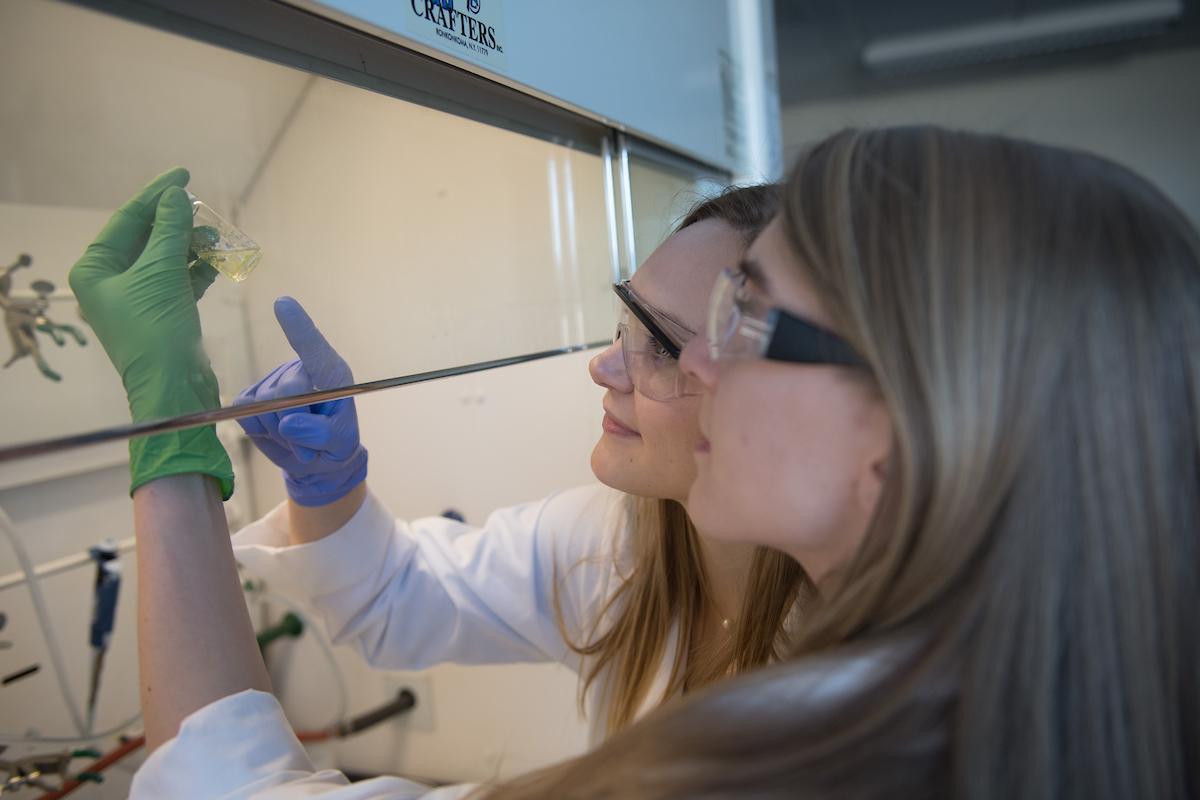
Radiochemistry requires hands-on skills working with radioactive material and completing complex tasks. This certificate requires students to participate in two intensive, one-week, hands-on laboratory sessions during the summer (CHEM 5129 and CHEM 5130), each running 6–8 hours per day.
CHEM 5129: Radiochemistry Separation Laboratory covers radiochemical separation techniques following EPA methods 900.0, 903.1, and 904.0—including gross alpha/beta screening, radium-226/228 purification, and uranium separation using extraction chromatography. Students also practice radiation safety fundamentals, including spill response, contamination surveys, and sample preparation.
CHEM 5130: Radiochemistry Instrumental Analysis Laboratory provides hands-on training setting up, calibrating, and operating the core instrumentation used in environmental and analytical radiochemistry labs: gamma spectroscopy (HPGe), liquid scintillation counting, alpha spectroscopy, and gas-flow proportional counting. Students build gamma libraries, review real spectra, and calculate results from their own counting data.
Program Details
Coursework draws on standard references in the field, including Radiochemistry and Nuclear Chemistry (4th ed.) by Choppin, Lilijenzin, Rydberg, and Ekberg; Detecting Environmental Radioactivity by Garcia-Leon; and the EPA's MARLAP Manual—the same resources used by practicing radiochemistry laboratories.
Sample course sequence (fall start)
Fall semester
- CHEM 5121: Nuclear Physics Concepts
- CHEM 5122: Radiochemistry Separation Concepts I
- CHEM 5124: Radiochemistry Instrumental Analysis I
- CHEM 5128: Radiation Safety and Health Physics
Spring semester
- CHEM 5123: Radiochemistry Separation Concepts II
- CHEM 5125: Radiochemistry Instrumental Analysis II
- CHEM 5126: Radiochemistry Data Analysis and Statistics
- CHEM 5127: Radiochemistry Quality Assurance
Summer session
- CHEM 5129: Radiochemistry Separation Laboratory (one week, in person)
- CHEM 5130: Radiochemistry Instrumental Analysis Laboratory (one week, in person)
Students who follow this sequence beginning in the fall can complete the certificate in one year.
Required online courses
- CHEM 5121: Nuclear Physics Concepts
- CHEM 5122: Radiochemistry Separation Concepts I
- CHEM 5123: Radiochemistry Separation Concepts II
- CHEM 5124: Radiochemistry Instrumental Analysis I
- CHEM 5125: Radiochemistry Instrumental Analysis II
- CHEM 5126: Radiochemistry Data Analysis and Statistics
- CHEM 5127: Radiochemistry Quality Assurance
- CHEM 5128: Radiation Safety and Health Physics
Required lab courses
- CHEM 5129: Radiochemistry Separation Laboratory
- CHEM 5130: Radiochemistry Instrumental Analysis Laboratory
Tuition Information
Tuition is charged per semester hour, and the certificate requires 12 semester hours total. Your rate depends on your enrollment status:
- Current University of Iowa graduate students pay the Graduate Radiochemistry CER rate.
- Non-degree certificate students (most working professionals applying from outside the University) pay the Graduate Radiochemistry CER hybrid rate.
To see current per-credit rates: visit the UI Tuition and Fees Rate Calculator, select the semester you're starting, choose College of Liberal Arts and Sciences (or Graduate College if you're a current UI graduate student), then select Radiochemistry as your program of study and choose the appropriate rate ("CER" or "CER hybrid") based on your enrollment status above.
Tip: Multiply the per-semester-hour rate by 12 to estimate your total tuition for the certificate.
Program Directors
Tori Z. Forbes, Ph.D. — Professor of Chemistry, University of Iowa
tori-forbes@uiowa.edu | 319-384-1320
Dustin May, Ph.D. — Environmental Lab Manager, State Hygienic Laboratory
Create your academic path
You'll find degree overviews, requirements, course lists, academic plans, and more to help you plan your education and explore your possibilities.
Current course list
The MyUI Schedule displays registered courses for a particular session and is available to enrolled students. The list view includes course instructors, time and location, and features to drop courses or change sections.
Faculty

Korey Carter

Scott R. Daly

Tori Z. Forbes

Pere Miro
